The Missing Foundation of AI in Supply Chain: Physical Product Intelligence
Artificial intelligence is rapidly changing distribution.
ERP systems, warehouse platforms, transportation networks, and eCommerce systems are becoming more predictive, automated, and connected. The promise is clear: faster decisions, fewer errors, and more efficient operations.
But underneath every AI-driven decision is one fundamental requirement:
The system must understand the physical product.
For years, supply chains have invested heavily in digital transformation while the products themselves have often remained poorly understood. Dimensions, weights, packaging configurations, and handling characteristics are frequently incomplete, inconsistent, or based on outdated supplier information.
That creates a hidden limitation.
AI can identify patterns.
AI can optimize workflows.
AI can automate decisions.
But AI cannot create physical truth that does not exist.
The missing foundation of AI-ready supply chains
Modern supply chains depend on accurate product data to make decisions about inventory placement, warehouse utilization, transportation costs, and fulfillment.
Yet many organizations still struggle with basic product intelligence:
- Accurate dimensions and weights
- Consistent unit-of-measure relationships
- Packaging hierarchy from individual units to cartons and pallets
- Verified shipping configurations
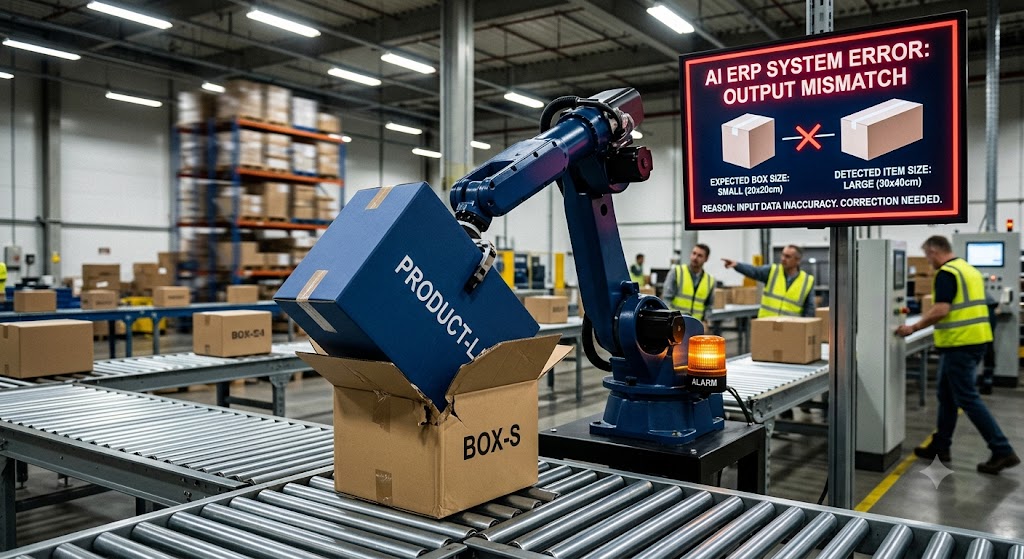
When this information is incomplete or inaccurate, every system built on top of it inherits those errors.
AI does not eliminate bad data.
It amplifies it.
As Peter Seele, a mobile dimensioning technology specialist working in distribution environments, explains:
The shift from digital transformation to physical digitization
Historically, capturing accurate product data was slow and manual. Companies relied on supplier specifications, spreadsheets, and teams physically measuring products one at a time.
That is changing.
Advancements in computer vision, 3D sensing, and AI-assisted data capture are making it possible to rapidly create accurate digital representations of physical inventory.
The same technologies driving AI adoption are also helping build the foundation AI depends on.
Instead of relying on assumptions, organizations can increasingly capture the reality of the product itself:
How large is it?
How much does it weigh?
How is it packaged?
How does it move through the supply chain?
This creates a transition from estimated product information to verified product intelligence.
Why physcial truth matters
Supply chains operate in a physical world.
Warehouses do not store database records. They store boxes.
Transportation networks do not move SKU numbers. They move products with specific sizes, weights, and packaging requirements.
Accurate product data impacts nearly every operational decision:
- How products are stored
- How warehouses are configured
- How freight is calculated
- How labor is planned
- How automation systems perform
- How accurately costs and delivery expectations are predicted
These are not just data problems.
They are physics problems.
The future of AI-powered supply chains
The next generation of supply chain intelligence will not be built only with smarter software.
It will be built by creating a more accurate understanding of the physical world.
Once products are accurately digitized, every layer above them becomes more capable:
ERP systems make better decisions.
Warehouse systems optimize more effectively.
Transportation networks reduce waste.
AI models become more reliable.
Sara Larson, who works with companies navigating this shift, summarizes it this way:
AI is not the foundation of the future supply chain.
It is the amplifier.
And what it amplifies depends entirely on the quality of the data beneath it.